The Camo Print Scale Nobody Talks About (and Why It Changes How It Looks on You)
Quick Answer: Blob size changes proportion in ways colour can’t fix. Small-to-medium scale suits smaller frames; larger, bolder scale reads proportionate on larger and taller frames. Garment size counts too — and medium scale is the safe default when you’re unsure.
Every camo guide online wants to talk about whether you’re warm-toned or cool-toned.
Almost none of them mention that the pattern comes in sizes, and that the size is doing more work than the colour.
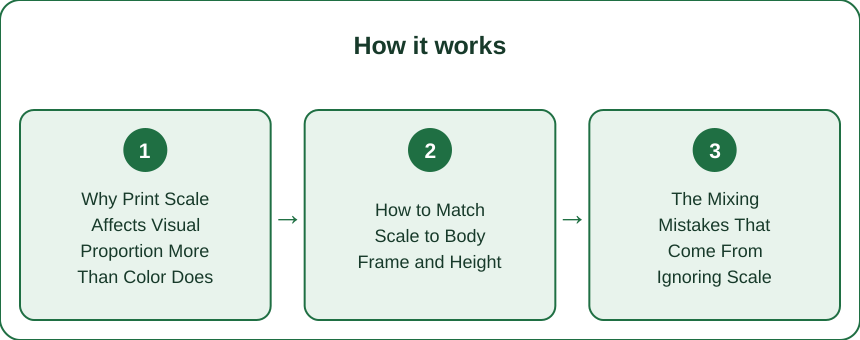
Why does print scale matter more than colour?
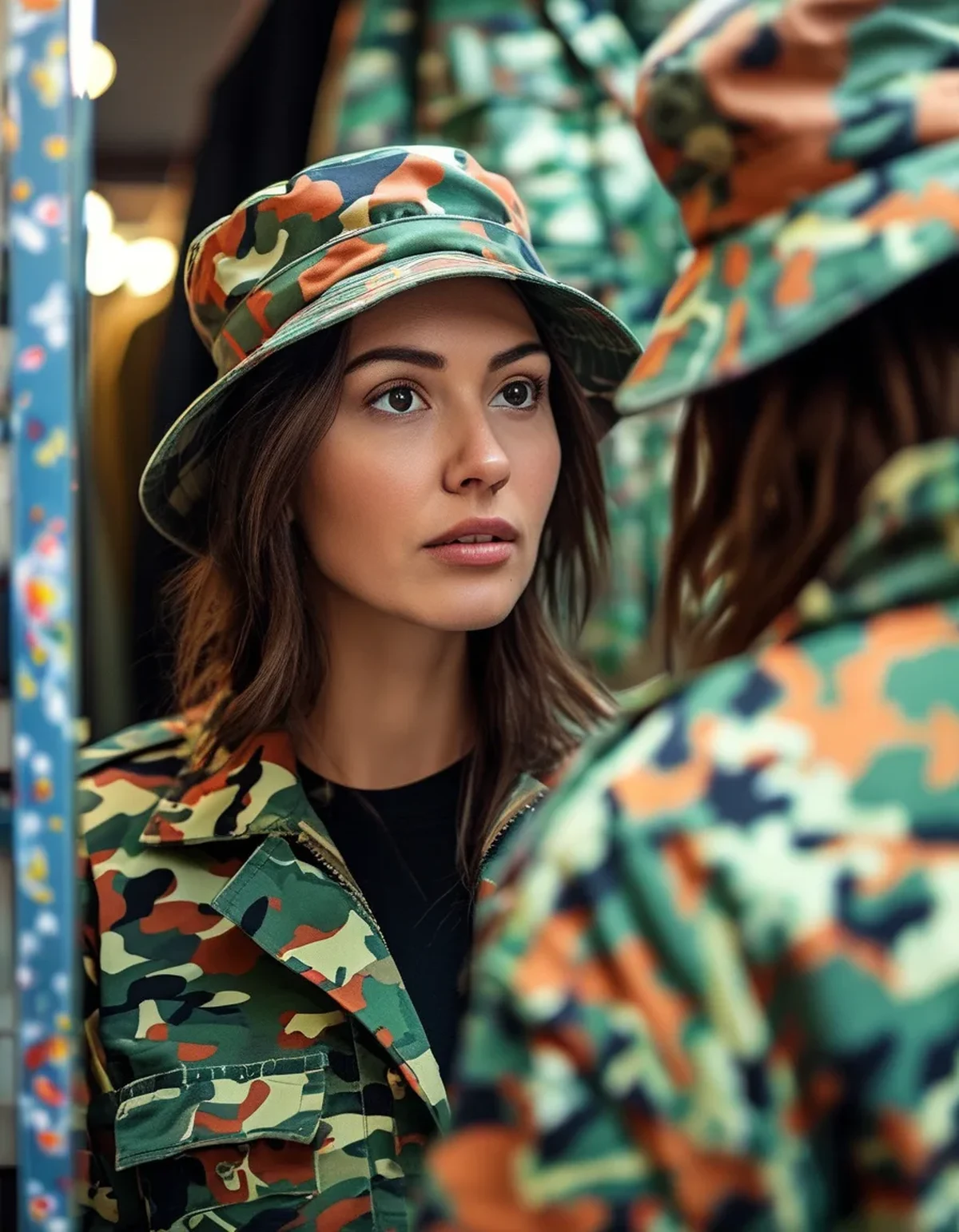
Large blobs command visual space. A bold, large-scale pattern can overpower a smaller frame regardless of how flattering the actual colours are on you.
Fine patterns can read muddy. Small-scale camo across a large garment area sometimes blurs into visual noise rather than reading as a pattern at all.
Scale changes the mood of the silhouette. The same cut reads more structured in a large bold pattern and softer in a fine one.
Distance behaves differently. Large-scale patterns show distinct colour blocks from across a room; small-scale patterns blend into a more uniform overall tone.
Most camo styling guidance addresses colouring almost exclusively, which leaves scale as an entirely unaddressed variable. Getting the colour right doesn’t guarantee the print works.
How do you match scale to your frame?
- Smaller frames: fine to medium scale generally proportions better than a large, bold blob pattern.
- Larger frames: larger-scale, bolder patterns often read proportionate rather than overwhelming.
- Taller frames: more visual space to display a bold pattern without it looking cluttered.
- Garment size matters independently. A large-scale print can work beautifully on a statement jacket and overwhelm a small accessory — regardless of your frame.
- Medium scale is the safe default. It proportions reasonably across the widest range of frames and garment sizes, which makes it the sensible first camo purchase.
Proportion, not preference, is the variable here. Preference decides between two options that both work.
5 Mistakes Everyone Makes
1. Mixing two different scales in one outfit. A large-scale jacket over small-scale trousers creates visual competition rather than cohesion. Mixing two camo prints works when the scales are close, not when they compete.
2. Copying a scale straight from a trend photo. The person in the photo has a different frame and height. The print that looked effortless on them is doing something different on you.
3. Doubling the bulk. Oversized silhouette plus large-scale print adds visual weight twice instead of balancing it. Pick one to be big.
4. Trusting the online photo. The third mistake is the expensive one — a print that reads elegant on a flat product image routinely reads considerably bolder in person. Scale is the hardest thing to judge from a screen.
5. Treating colour as the whole decision. Getting the base tone right and ignoring scale is how a technically well-matched piece still ends up unworn.
How do you get the scale right in practice?
Decide scale before you shop for colour. It narrows the field faster, and it’s the harder variable to correct after the fact.
Hold the garment up at full length. Scale reads differently on a hanger detail than across a whole piece. Step back — proportion needs distance to assess.
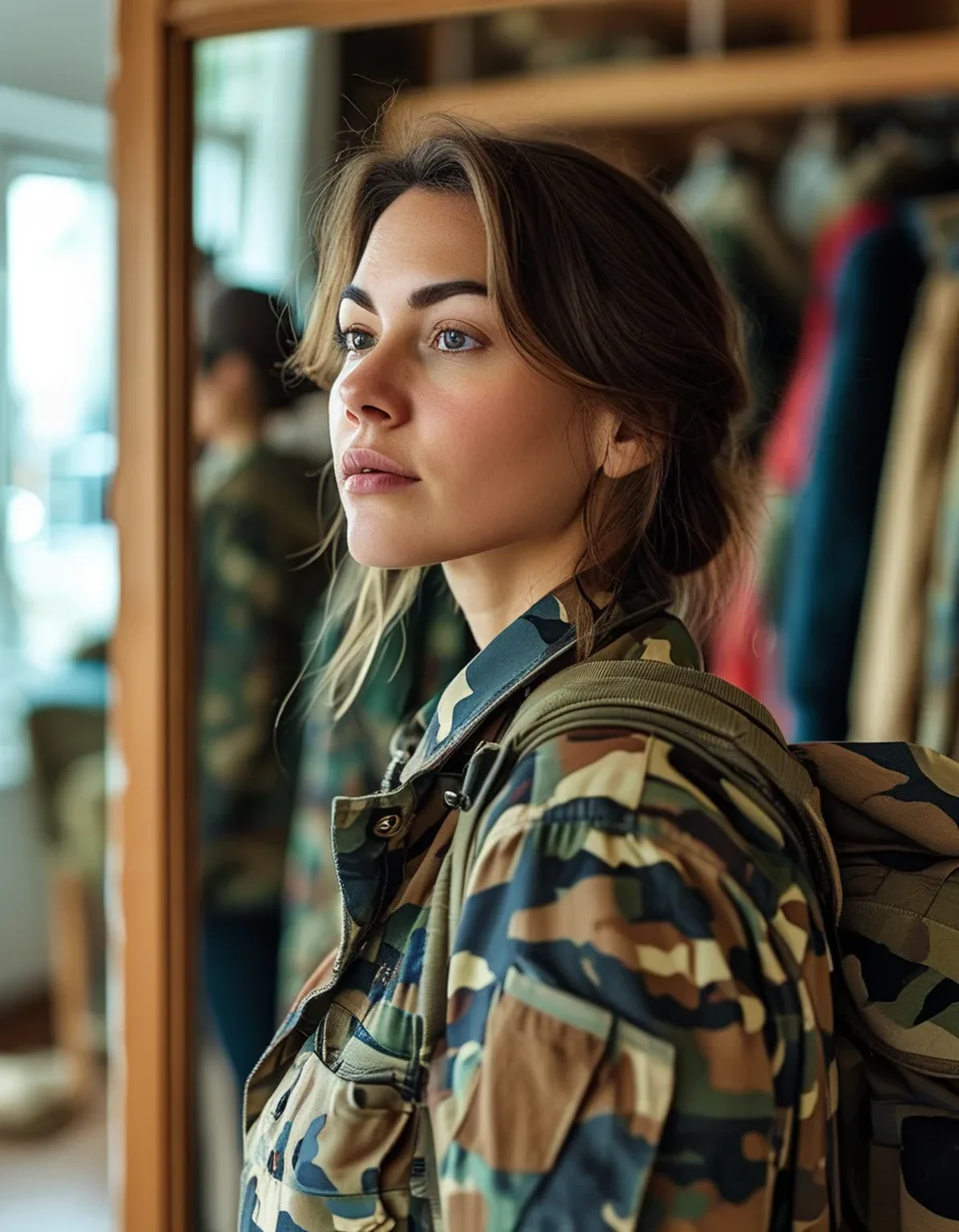
Check it in a full-length mirror, not a phone screen. The exact thing that flatters in a cropped photo can dominate in a full-length view.
Match the scale to the garment as well as to you. A bold print earns its place on a jacket or a pair of trousers; on a small accessory it often just looks busy.
When unsure, go medium. It’s the version most likely to still work in two years and across more of your wardrobe. Our guide to choosing scale covers the finer distinctions.
FAQ
Can I wear large-scale camo if I’m petite?
Yes — the practical adjustment is where you put it. A large-scale print on a smaller garment area, or on a bottom half paired with a plain top, keeps it from taking over. Our petite styling guide covers placement in more detail.
How do I tell what scale a print is online?
Look for a full-length model shot rather than a flat lay, and compare the blob size against something known — a button, a pocket, a hand. Product photography is routinely cropped in a way that makes scale nearly impossible to read.
Does scale matter as much on activewear as on outerwear?
Arguably more, since camo leggings sit close to the body and the print follows your actual shape. Small-to-medium scale is generally the safer choice on fitted pieces than on structured outerwear.
TL;DR:
- Print scale changes visual proportion in ways colour choice can’t correct.
- Large blobs command space and can overwhelm a smaller frame; fine prints can go muddy across large areas.
- Smaller frames suit small-to-medium scale, larger and taller frames carry bold scale well.
- Garment size matters independently of body size.
- Don’t mix competing scales, don’t copy a trend photo’s scale, and don’t double bulk with oversized-plus-large-scale.
- Judge scale in person and full length; default to medium when uncertain.
Keep Reading
This article is for general informational and styling purposes only. Fit, sizing, and product availability may vary — check current details before purchasing.