Camo Is a Neutral: The Print-Mixing Starter Guide

Quick Answer: Yes, camo counts as a neutral — its muted, organic pattern reads as texture rather than a “loud” print, so it pairs with stripes, leopard, or small florals the same way denim does. Start with stripes, keep prints to two max while you’re learning, and add one solid buffer piece to keep the outfit grounded.
Here’s the styling secret hiding in plain sight: camo behaves like a neutral. Its muted greens and browns play as nicely as denim, which means it can host other prints without a fight breaking out in your closet.
Why does camo count as a neutral?
Neutrals are patterns your eye simply stops reading as “a pattern” — denim, small stripes, and yes, camo’s organic blobs all fall into that category. Camo’s muted palette and lack of hard geometric lines is why: your brain files it as texture rather than as a competing print. That filing mistake, in the best way, is a styling superpower, because it frees camo up to sit under, next to, or against almost anything else in your closet.
What’s the easiest way to start mixing prints with camo?
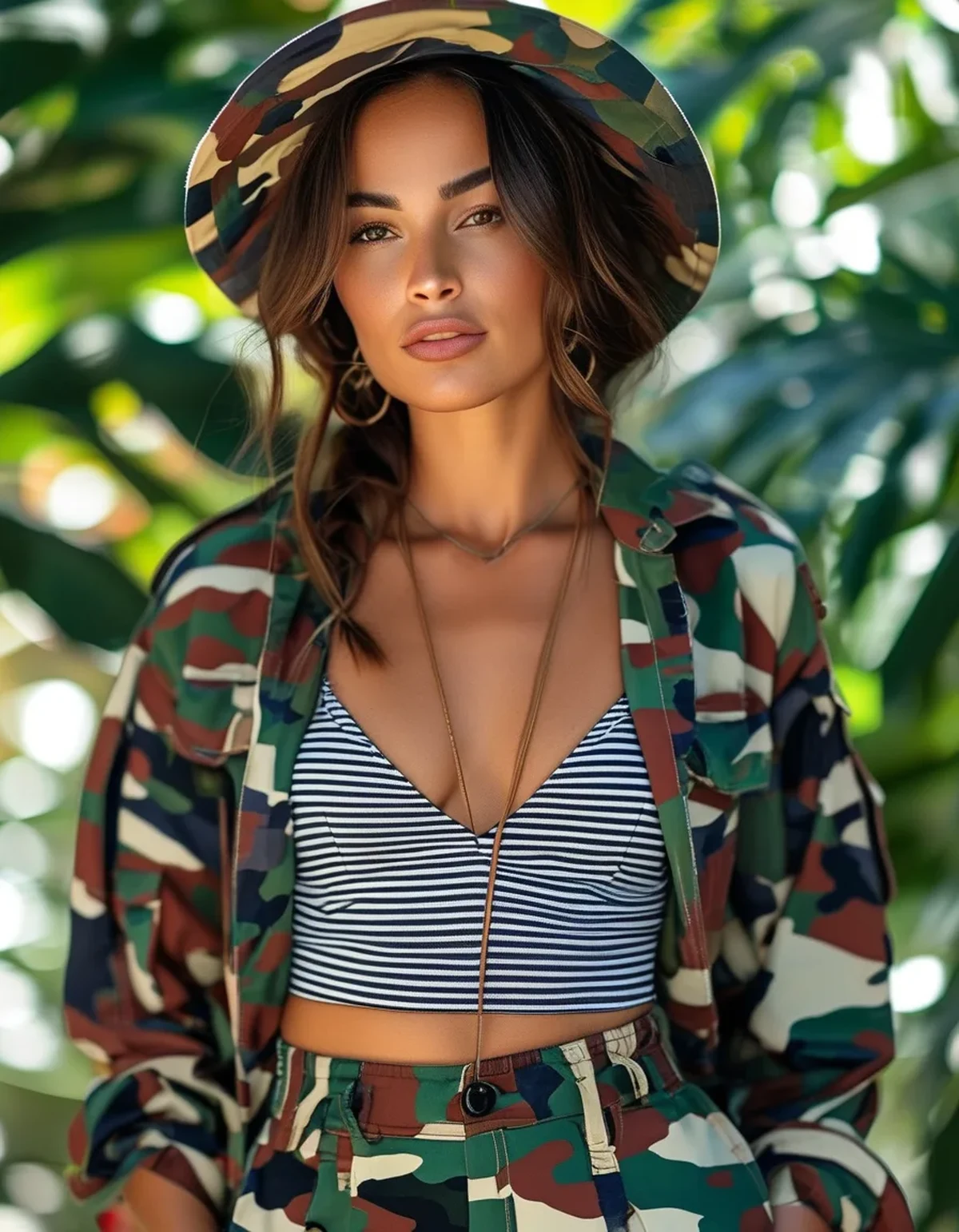
Start with stripes — specifically, camo pants with a breton stripe top. The stripe’s crisp, straight lines against camo’s organic shapes is the classic first mix: contrast in structure, harmony in the muted palette. It’s an easy combination to reach for on a normal Tuesday, and it’s also the fastest way to kill print-fear for good. Wear it once, feel nothing bad happen, and the whole “prints are advanced” myth quietly dies.

How do I level up to leopard and florals?
Once stripes feel easy, leopard accessories — shoes, a belt, a small bag — paired with camo reads as fashion-fluent rather than chaotic, since you’re essentially letting two “neutral prints” compare notes instead of compete. Small, dark florals work the same way. The trick that makes it click: keep one print big and one small. Two large-scale prints of similar size tend to fight for attention; a big print and a small one read as intentional, almost like cousins at the same party instead of twins fighting over the same outfit.
What are the guardrails for mixing camo with other prints?
A short list to keep you out of trouble while you’re still learning:
- Two prints max, while you’re building confidence — a third print is where things usually go sideways.
- Shared undertones — pair warm-toned camo with warm-toned prints, and cool with cool, so the palette feels connected instead of random.
- One solid buffer piece somewhere in the outfit — a plain tee, a solid jacket, or solid shoes — to give the eye somewhere to rest.
- When in doubt, swap the second print for texture — suede, knit, or denim can deliver the same “layered” feeling without the pattern-matching risk.
Think of it as a loose 80/20 split: let one print dominate the outfit and let the second one show up in a smaller dose, like an accessory or a trim.
Myth vs. Fact
Myth: Print mixing is an advanced skill only stylists can pull off. Fact: With camo as your base, it’s genuinely beginner-friendly — camo already behaves like a neutral, which removes most of the guesswork that makes print mixing feel intimidating.
Myth: Any two prints will work together as long as you’re confident. Fact: Confidence helps, but scale and undertone do the actual heavy lifting. A big print paired with a small one, in matching warm or cool tones, is what makes a combination look intentional instead of accidental.
Myth: You need a lot of prints in your closet to pull this off. Fact: You need surprisingly few. One camo piece, one striped piece, one leopard accessory, and a couple of solid buffer pieces cover most of the starter combinations here — and here’s the part that surprises people: the “guardrails” section is usually the one detail beginners skip, and it’s the one that prevents the most outfit regret.
FAQ
Does camo really count as a neutral like denim?
Yes — camo’s muted, organic pattern and lack of hard geometric lines make your eye read it as texture rather than a competing print, the same way it reads denim. That’s exactly what makes it easy to pair with other patterns.
What’s the easiest print to pair with camo first?
Stripes are the easiest starting point, especially a simple breton stripe top with camo bottoms. The contrast in structure against camo’s organic shapes reads as intentional rather than clashing.
How many prints should I wear at once when I’m starting out?
Stick to two prints max while you’re building confidence, plus one solid buffer piece somewhere in the outfit. Once mixing feels natural, you can experiment with pushing past that guardrail.
TL;DR:
- Camo behaves like a neutral — muted palette, no hard geometry — so it pairs with other prints the way denim does.
- Start with stripes (camo bottoms, striped top) as the easiest, lowest-risk combination.
- Level up to leopard or small florals once stripes feel easy, keeping one print big and one print small.
- Keep it to two prints max while learning, match undertones, and add one solid buffer piece.
- When unsure, swap the second print for texture instead — suede, knit, or denim.
- Print mixing isn’t a rare talent — camo just makes it easy to start.
Keep Reading
This article is for general informational and styling purposes only. Fit, sizing, and product availability may vary — check current details before purchasing.