Why Does Camo Sizing Run Differently Than Solid Colors From the Same Brand?

Quick Answer: Short answer: it’s not really the size label that changes, it’s three separate things stacking up — where the print lands on your body, how the printing process itself can slightly change the fabric’s stretch and feel, and how your eye reads a busy pattern versus a flat color. Camo leggings and solid leggings in the exact same size can leave two different impressions in the mirror, and almost none of it is the tag lying to you. Below is what’s actually happening and how to size around it.
Does the Camo Print Itself Change How a Garment Fits?
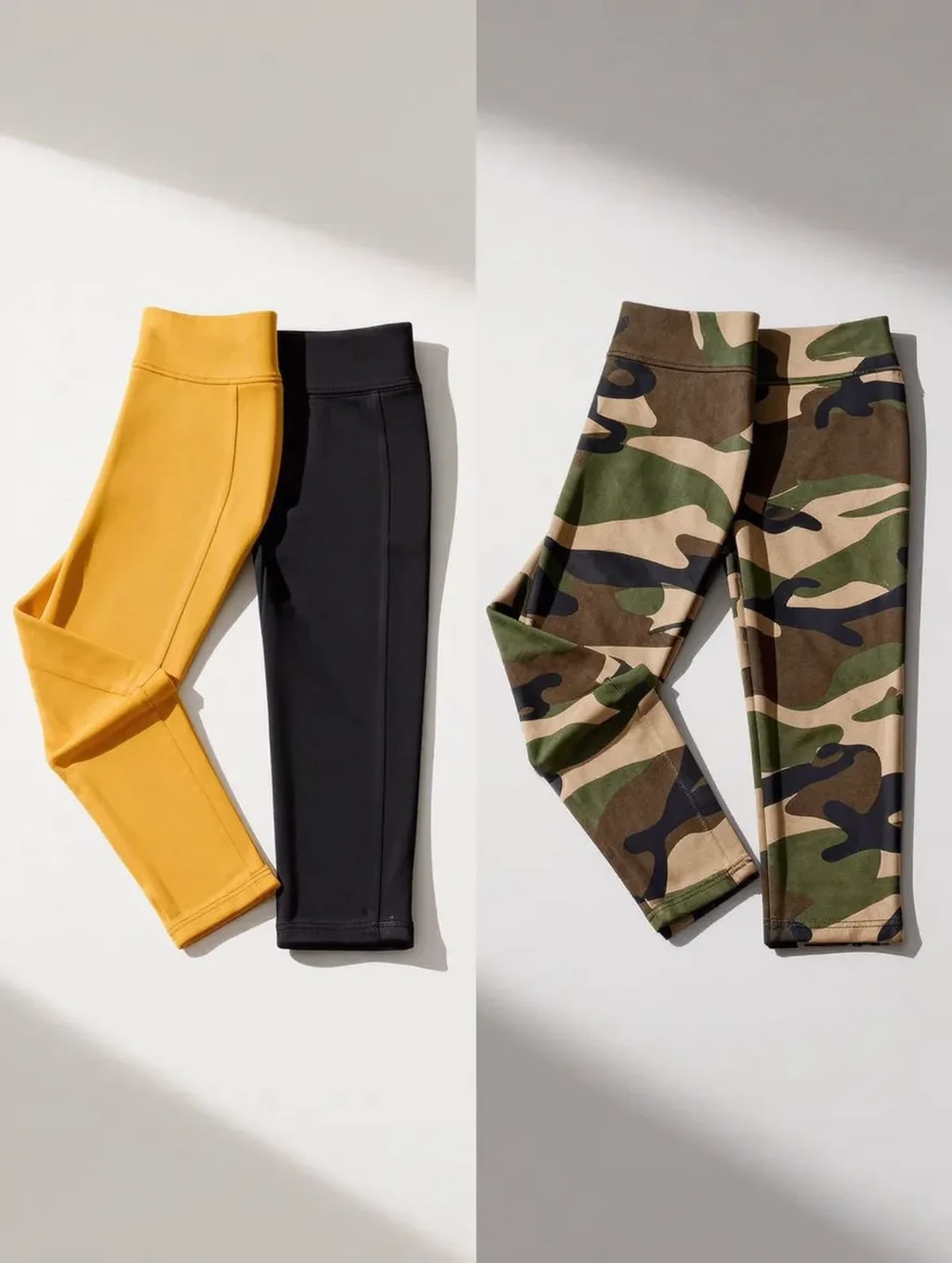
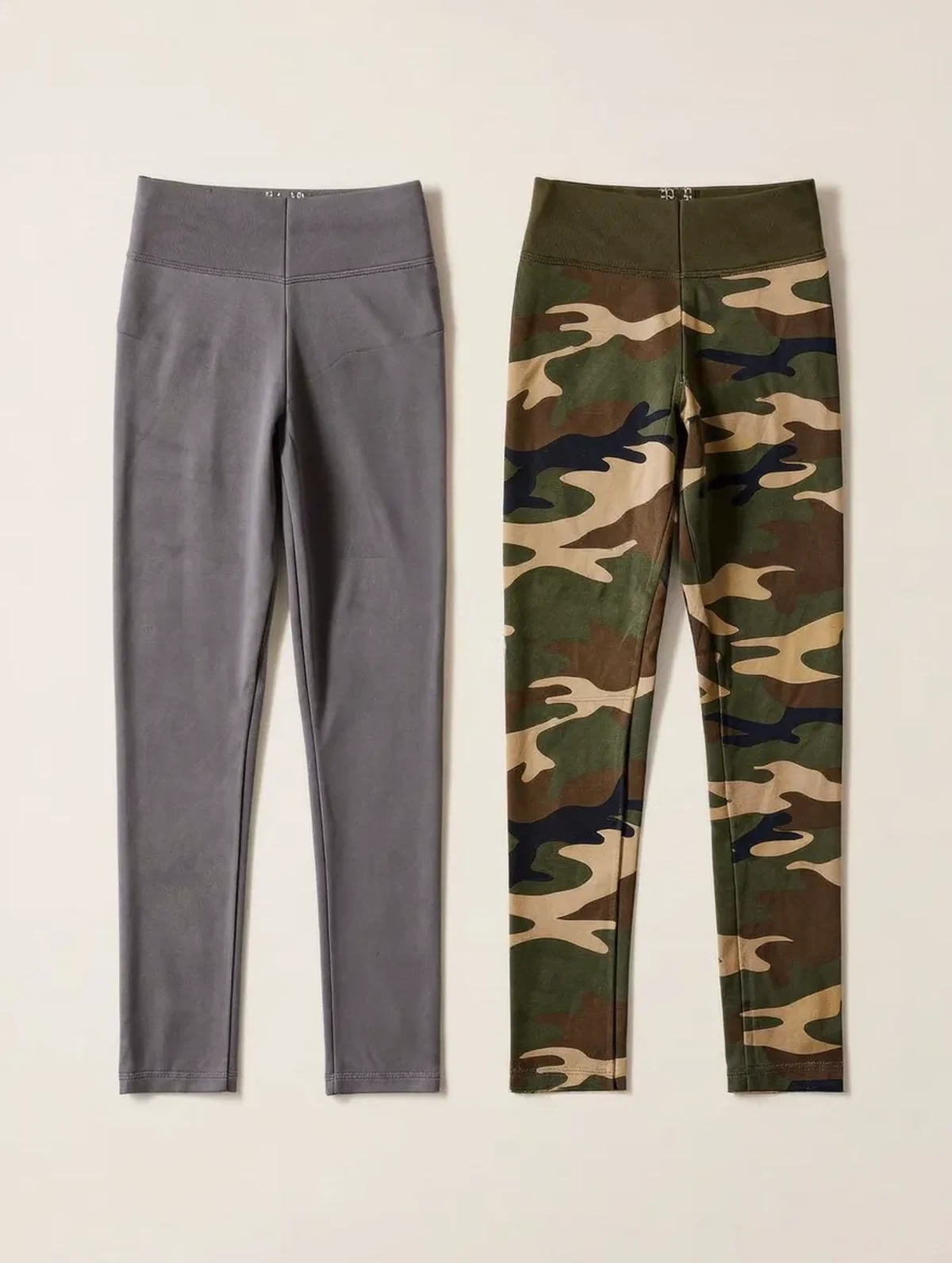
Not the fit in a technical sense — a size medium camo legging and a size medium solid legging are cut from the same pattern block almost every time. What changes is where the print’s darker and lighter blotches happen to land once the fabric is cut and sewn. Camo prints are irregular by design, so the placement of a dark olive blob versus a tan blob isn’t controlled per garment the way a color-blocked seam is. That means one legging might have a dense, dark patch sitting right across the widest part of the thigh, while the next one in the same size has a lighter tan patch in that same spot.
Dark patches recede visually, light patches advertise. So two people in the identical size, same style, same brand, can look like they’re wearing different-fitting pants purely because of where the blotches fell. This is print placement variance, and it’s a known issue in printed apparel generally — it’s why some brands rotate print direction on the cutting table and others don’t bother, since matching camo patterns across seams the way you’d match a stripe is far less noticeable if you get it wrong.
The practical takeaway: if you’re choosing between two camo leggings in the same size and same style but they’re not identical prints (different dye lots, different batches), don’t assume the one that looks “smaller” from a photo actually runs smaller. Check the flat measurements — waistband width, inseam, rise — which are unaffected by print. Those numbers tell you the true size; the photo is telling you where the color happened to land.
How Does the Printing Process Affect Stretch and Hand-Feel?
This part is real, not just perception. Most performance leggings and fitted tops use a sublimation or pigment-print process where the design is either heat-transferred onto the fabric or printed with a binder that sits on the surface. Both processes add a layer to the textile that a solid-dyed piece doesn’t have — solid colors are usually dyed in the yarn or in the finished knit bath, which doesn’t add material to the surface, while sublimation ink and print binders do.
That extra layer can very slightly stiffen the fabric’s hand-feel and, in a meaningful number of cases, reduce the four-way stretch recovery by a small percentage — often not enough to notice at rest, but enough to feel tighter across compression areas after a few wears, once the fabric has been stretched and released repeatedly. Print-heavy pieces (camo scales with a lot of ink coverage, since camo typically uses three to four ink colors across nearly the entire garment) carry more of this printed surface than a small logo or accent print would, so the effect is more likely to show up on a full-coverage camo legging than on a mostly-solid top with a small camo panel.
This is also why some brands intentionally cut printed styles a touch roomier than their solid counterparts in the same size — not a design choice, a compensation for the fabric behaving slightly differently once ink is added. If a brand does this, it’s usually noted in the product description as “printed styles fit true to size, solids run slightly closer” or similar language, worth checking before assuming the size chart numbers alone tell the whole story.
Myth vs Fact — Camo Print Sizing
Myth: Camo always runs a size smaller than solids. Fact: this isn’t consistently true across brands — some camo styles run identically, some run a touch roomier to compensate for reduced stretch, and a smaller number run tighter due to print-layer stiffness. There’s no universal rule, which is exactly why checking flat measurements per style beats relying on a general camo rule of thumb.
Myth: Large-scale camo makes you look bigger, so size up. Fact: large-scale (bigger blotches, wider color blocks) camo can visually add width in photos because bigger shapes read as bigger mass to the eye — but this is a photography and perception effect, not an actual fit difference. Sizing up to compensate for how a print looks in pictures usually just creates loose fabric that then bunches and looks worse in person than a properly sized piece would.
Myth: Small-scale, tight-repeat camo is always the most slimming option. Fact: it’s the most photograph-friendly at a distance, since fine detail blurs into a texture rather than a pattern, but at close range or under bright flash, small-scale camo can create a slight moiré or busy-texture look that draws more eye attention to the area than a mid-scale print would. The most flattering scale actually depends on the viewing distance the piece will mostly be seen at.
Myth: If the tag size matches, the fit will match, regardless of print. Fact: as covered above, this ignores both the stretch-layer difference from printing and the placement-variance issue. Tag size is a starting point, not a guarantee, for printed pieces specifically.
How Pattern Scale Creates a Sizing Illusion
This is the piece most people don’t think about until it’s pointed out: your eye doesn’t measure garments, it estimates them relative to the pattern printed on them. A large-scale camo print — big, blocky shapes with only three or four repeats across a legging — gives your eye very few reference points, so any curve or bulge reads as more pronounced because there’s less visual “noise” breaking it up. A small-scale, tightly-repeated camo does the opposite: it gives the eye dozens of small reference points, which breaks up the silhouette’s outline and tends to read as more streamlined, the same principle behind why fine pinstripes look slimming and wide plaid doesn’t.
This is a genuine optical effect studied in garment and textile design, not a marketing claim — pattern density changes perceived proportion even when the actual garment measurements are identical. It means two people can try on the exact same size in two different camo scales from the same collection and walk away with completely different impressions of “does this fit,” even though a measuring tape would say both fit the same.
Practical filter: if you’re torn between two camo scales in the same size, go by print density rather than assuming one “runs bigger.” A dense, small-repeat print will generally photograph and wear as more fitted-looking than a bold, large-blotch print in the identical cut, purely because of how the eye processes the pattern — not because the fabric measurements differ.
TL;DR:
- Camo doesn’t actually run a different size than solids on the tag — three separate effects create that impression.
- Irregular print placement can put a dark or light blotch right at your widest point, changing how the fit looks in photos.
- The printing/dye process can slightly stiffen fabric and reduce stretch recovery compared to solid dye.
- Large-scale prints create an optical illusion of added bulk while small-scale prints read as more streamlined — check flat measurements over the tag size and match print scale to how the piece will actually be seen up close versus at a distance.
Trust the measuring tape over the mirror when camo is involved — the print is doing more to your perception than the pattern maker ever did to the actual cut.
See It in Motion
Seen here: High Waist Yoga Leggings with Side Pockets — shop it on bubblelime.com
Keep Reading
This article is for general informational and styling purposes only. Fit, sizing, and product availability may vary — check current details before purchasing.