Why Does Camo Sometimes Look Like a Costume Instead of an Outfit? The Styling Line That Matters

Quick Answer: Camo reads as a costume when it’s paired with other ‘loud’ or theme-matching pieces (combat boots, cargo everything, olive-on-olive); it reads as intentional style when it’s the single statement piece against otherwise simple, neutral basics. One loud piece plus quiet everything else is the core rule.
Camo print has genuinely gone mainstream, but it still has a tipping point where an outfit stops looking ‘fashion-forward’ and starts looking like it’s trying to reenact something. That tipping point is almost always about repetition, not the print itself.
Why does ‘matching the theme’ backfire with camo specifically?
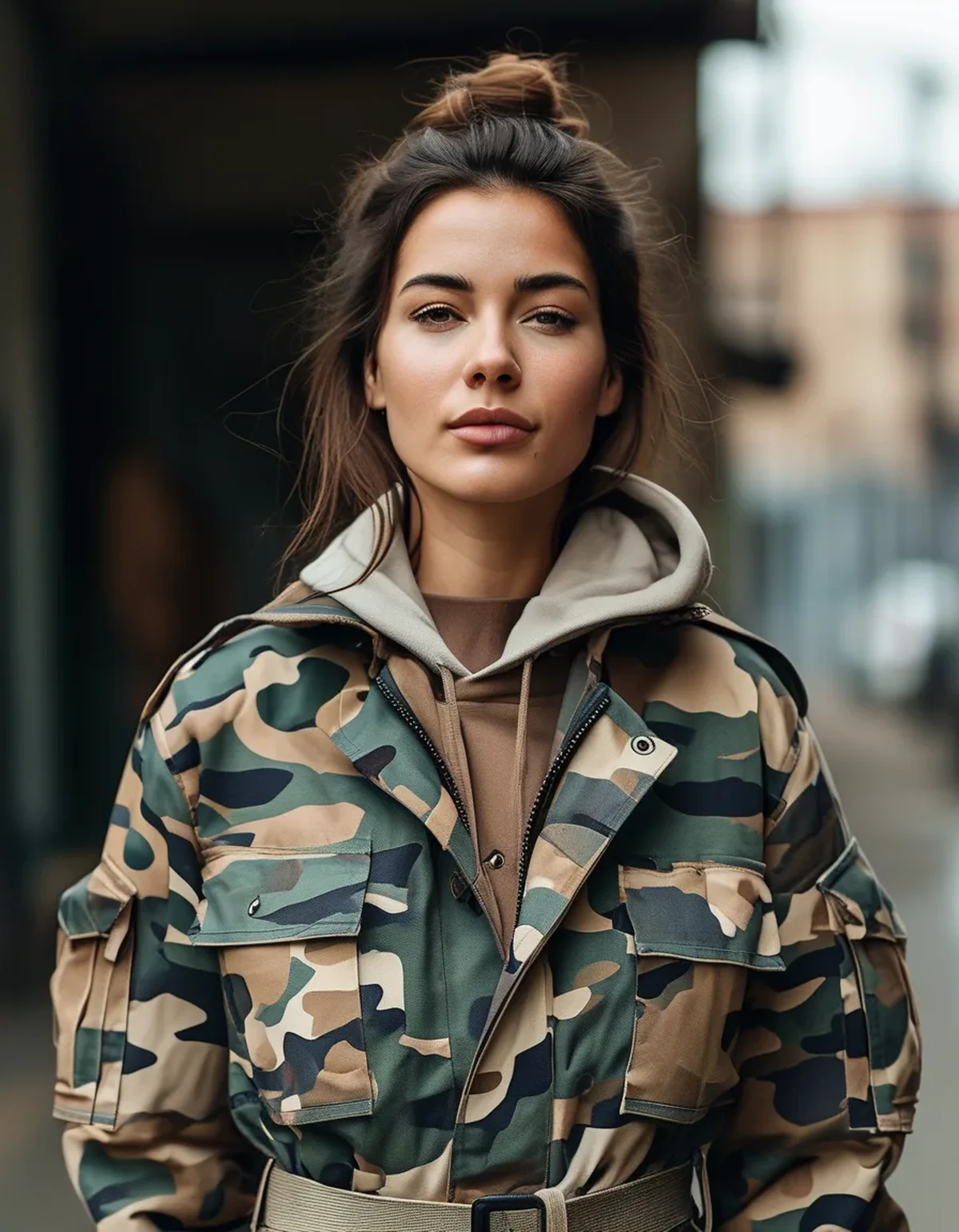
Because camo is already a high-visual-noise print — it’s doing a lot of visual work on its own. Pairing it with other military-adjacent or busy pieces (cargo pants, combat boots, olive layering pieces) pushes the total look past the point where it reads as ‘considered outfit’ and into ‘costume’ territory, since every element is reinforcing the same single idea instead of balancing it.
The fashion styling principle at play: one statement, rest quiet. This applies to any bold print, but camo is especially sensitive to it because the print itself already implies a strong, specific aesthetic reference.
What does the ‘one loud piece’ rule look like in practice?
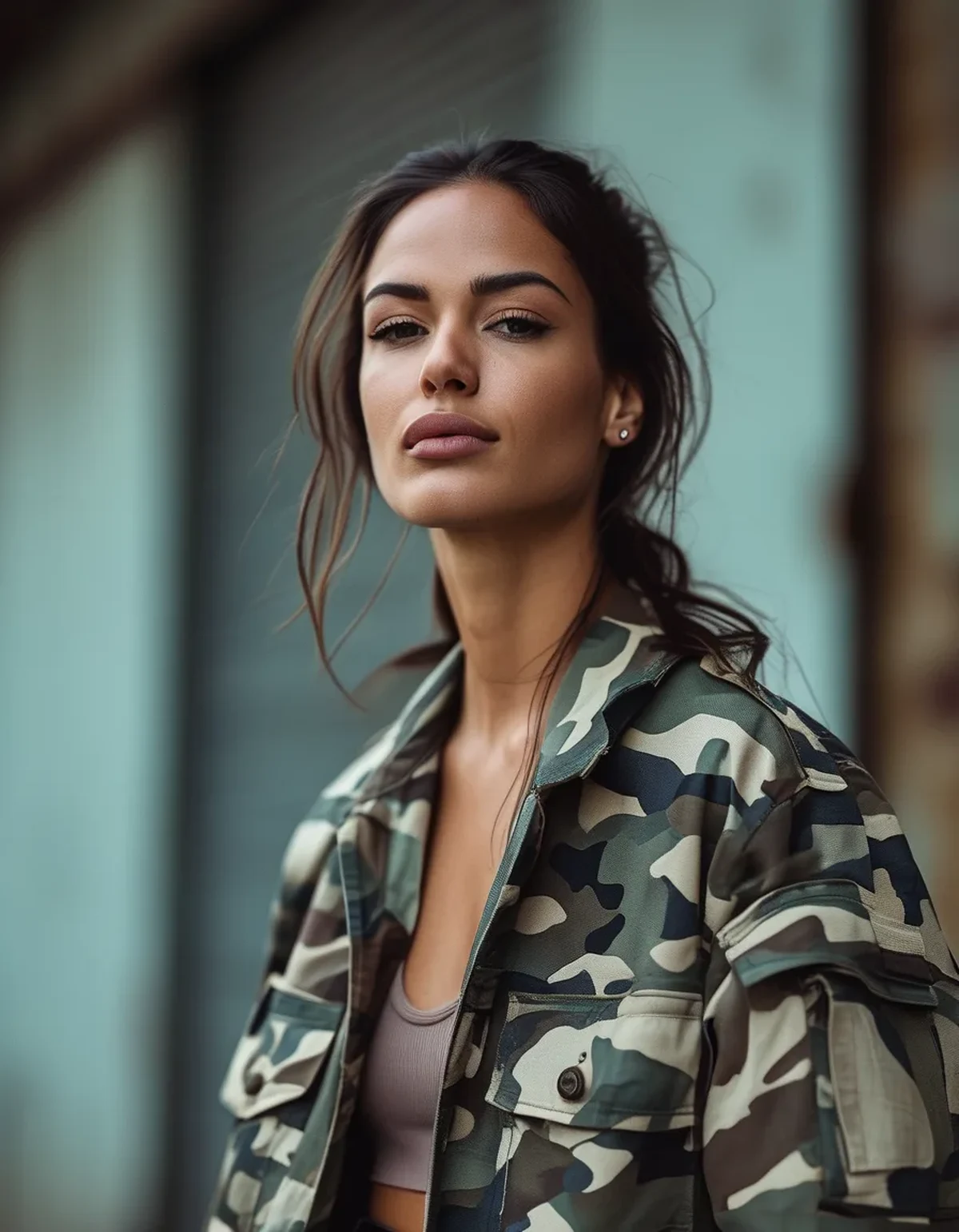
Pick exactly one camo piece as the outfit’s statement — a jacket, a skirt, or a bag, not multiple — and pair it with genuinely simple, solid-color basics: a white tee, black leggings, plain sneakers.
The contrast between the busy print and the calm basics is what makes it read as a styling choice rather than a uniform. If you’re wearing camo on top and bottom, or camo plus other patterned pieces, the outfit loses that contrast entirely.
Myth vs Fact: Camo Styling Edition
Myth: Camo only works with other utility-wear. Fact: Camo actually contrasts more interestingly against soft, feminine, or minimalist pieces — a camo jacket over a slip dress reads more elevated than camo over more camo-adjacent items.
Myth: Camo is inherently casual and can’t be dressed up. Fact: A camo piece with structured tailoring elsewhere (blazer trousers, a fitted silhouette) reads as fashion-forward, not costume — it’s about what surrounds it.
Myth: All camo patterns work the same way stylistically. Fact: Traditional woodland/military camo reads more ‘costume-adjacent’ than fashion camo prints (pastel camo, abstract or oversized-scale camo), which were designed specifically for style rather than function and carry less of that association.
How does accessorizing change the read?
Accessories are where a lot of the costume-vs-styled distinction actually happens:
- Delicate jewelry (thin gold chain, small studs) contrasts camo’s boldness and signals ‘intentional fashion choice’
- Heavy tactical accessories (dog tags, tactical belts, camo-print bags on top of a camo garment) push it back toward costume
- A single unexpected color accessory (a bright bag or shoe) can pull a camo outfit toward editorial rather than literal
FAQ: Camo Styling Questions, Answered
Can camo work for a more polished or office-adjacent look?
Yes, in small doses — a camo-print blouse or scarf under a solid blazer, for instance, keeps the print as an accent rather than the whole statement.
Does camo color matter for how dressy it reads?
Significantly — traditional green/brown woodland camo skews more casual/utility, while black-and-grey or monochrome camo reads more versatile and easier to dress up.
Is there a body-type consideration with camo specifically?
Not inherently — see our camo print guide for every body type for fit-specific guidance, but the styling-versus-costume distinction in this piece applies regardless of body type or size.
TL;DR:
- Camo reads as costume when paired with other loud, theme-matching pieces — the print needs contrast, not reinforcement
- Rule: one camo statement piece, everything else simple and solid-colored
- Soft, minimalist, or tailored pairings elevate camo more than utility-wear pairings do
- Delicate accessories push the look toward styled; tactical accessories push it toward costume
Next time you reach for camo, check what else is in the outfit — if more than one piece is ‘loud,’ swap the rest for basics first.
Keep Reading
This article is for general informational and styling purposes only. Fit, sizing, and product availability may vary — check current details before purchasing.