Camo Swimwear Is Having a Moment — Here's How to Wear It Without Looking Like a Costume

Quick Answer: Camo swimwear reads chic, not costume, when the print stays confined to one piece and every other layer — cover-up, sandals, bag — is a plain solid in a color pulled from the camo itself.
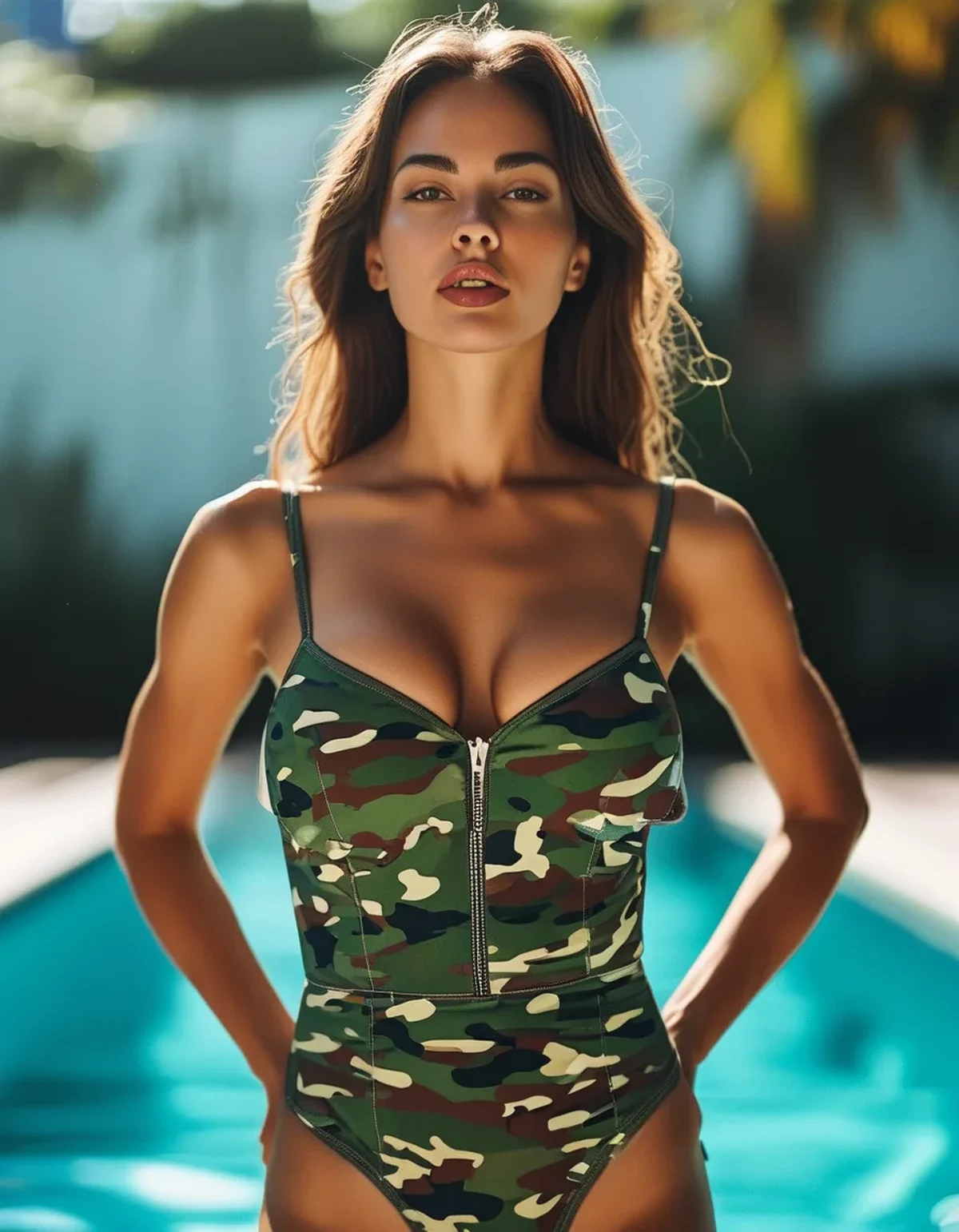
Camo print swimwear has quietly moved from tactical-gear territory to the pages of resort collections, and it’s easy to see why: the muddy, layered color palette photographs beautifully against turquoise water. But the line between ‘editorial’ and ‘paintball tournament’ is thinner than you’d think, and it comes down to a handful of specific choices rather than taste alone.
Why Camo Swimwear Works (When It’s Done Right)
The appeal is the same reason camo works in fashion generally: it’s a busy print that still reads as neutral because its colors are muted and earthy rather than bright or saturated. On a swimsuit specifically, that muddiness contrasts beautifully against blue water and pale sand, which is exactly why it photographs so well on vacation and shows up so often in resort marketing imagery.
The risk is scale and repetition. A print that looks sophisticated at a small scale on a one-piece can look like a hunting blind at a larger scale on, say, a maxi cover-up plus matching hat plus matching bag. The print itself isn’t the problem — how much surface area it covers is.
The One-Piece Rule
Keep the camo print to a single garment. A camo one-piece or bikini top is a statement piece; camo one-piece plus camo cover-up plus camo visor is a uniform, and it reads that way in photos even if each individual piece looked fine in the store. If you love the print enough to want it in more than one piece, alternate instead: camo bottoms with a solid top, or a camo top with solid bottoms, not camo repeated across every layer.
This is the single fastest fix if a camo swim look feels ‘off’ in the mirror — remove one camo element and the whole outfit resets into something that reads intentional rather than random.
What to Pair It With
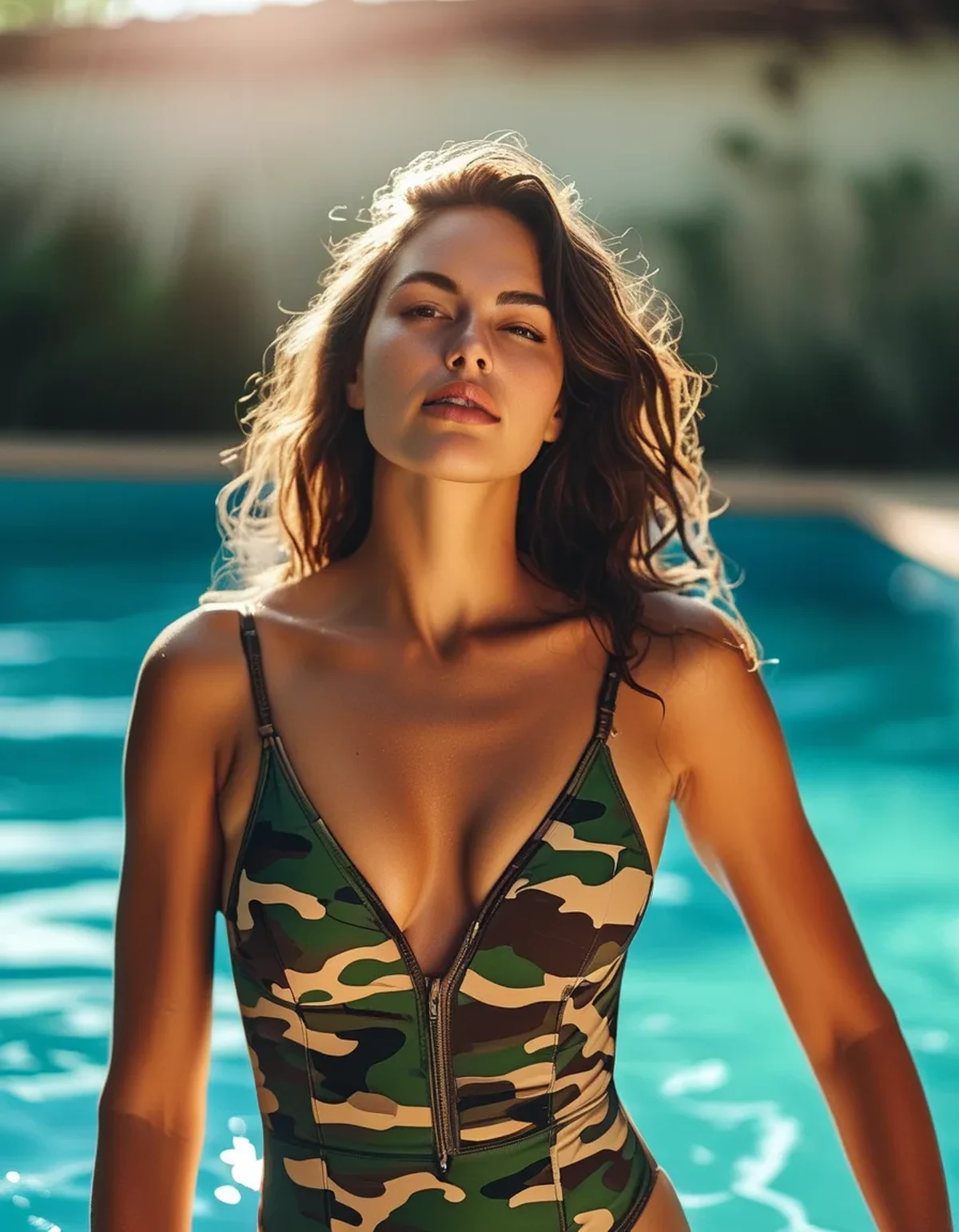
Pull one color out of the camo pattern — usually an olive, a warm khaki, or a deep rust — and use that as your solid accent color for everything else: cover-up, slides, tote bag, sunglasses frame. This single-color-echo trick is what stylists use to make any busy print look intentional rather than random, and it works because it gives the eye one consistent thread to follow across the whole look instead of competing patterns and colors fighting for attention.
Skip other prints entirely (florals, stripes, animal print) for the rest of the look. Camo needs to be the only pattern in the frame — mixing it with a second print is one of the fastest ways to push the whole outfit into costume territory.
Myth vs Fact: Camo Swimwear
Myth: camo swimwear only works on an athletic body type. Fact: because the print is broken up into irregular blotches rather than one solid mass, it’s genuinely one of the more forgiving prints across body types — the irregular shapes break up the silhouette rather than clinging to it or emphasizing one area, the way a solid color or a tight geometric print sometimes does.
Myth: camo print swimwear is only for younger or ‘edgy’ dressers. Fact: high-end resortwear lines have run camo one-pieces in classic silhouettes (halter necklines, ruched sides, high-cut legs) that read polished rather than trendy — the cut and construction of the suit matter more to the final impression than the print choice itself.
Myth: darker camo colorways always look more serious or somber. Fact: a warm-toned camo in olive and rust reads completely differently against a beach backdrop than a grey-and-black tactical colorway — the same print family can look vacation-ready or utilitarian depending purely on which colorway you pick.
FAQ: Camo Swimwear Questions, Answered
Does camo swimwear work for a family beach trip or is it too bold?
A single camo one-piece is genuinely low-key next to bright florals or neon — the earthy tones are closer to a neutral than a loud statement print, so it fits a casual family setting fine without drawing more attention than any other patterned suit would.
What skin tones does camo swimwear flatter most?
Warm-toned camo (olive, tan, rust) tends to flatter warm and olive skin undertones, while a cooler grey-and-navy camo variation works better against fair or cool undertones — try holding the suit against your wrist in daylight before buying to see how the specific colorway reads against your own skin.
Can I wear camo swimwear to a pool club or is it too casual?
A structured one-piece cut (not a tiny triangle bikini) in camo reads polished enough for a pool club setting, especially paired with a solid cover-up and simple gold jewelry rather than beachy, casual accessories like a straw hat or rope sandals.
How do I keep a camo swimsuit from fading after repeated pool or ocean use?
Rinse it in cool fresh water immediately after chlorine or salt water exposure and avoid the dryer entirely — camo prints rely on subtle tonal contrast between the colors, and fading tends to flatten that contrast faster than it would on a solid-color suit, making the print look muddier rather than crisp.
TL;DR:
- Keep camo confined to one swimwear piece; everything else stays solid
- Pull a single color out of the camo print and repeat it in your cover-up, bag, and shoes
- Skip other prints entirely — camo needs to be the only pattern in the outfit
- The irregular print shape is actually more body-forgiving than most solid swimsuits
- A structured cut (not a tiny triangle bikini) reads more polished if you want it pool-club appropriate
Camo swimwear is one of those trends that photographs far better than it sounds on paper — treat it like any other statement piece, one at a time, and it earns its spot in your beach bag rather than reading like a costume.
Keep Reading
This article is for general informational and styling purposes only. Fit, sizing, and product availability may vary — check current details before purchasing.