Yes, You Can Mix Camo With Other Prints — Here's the Rule That Keeps It From Looking Chaotic

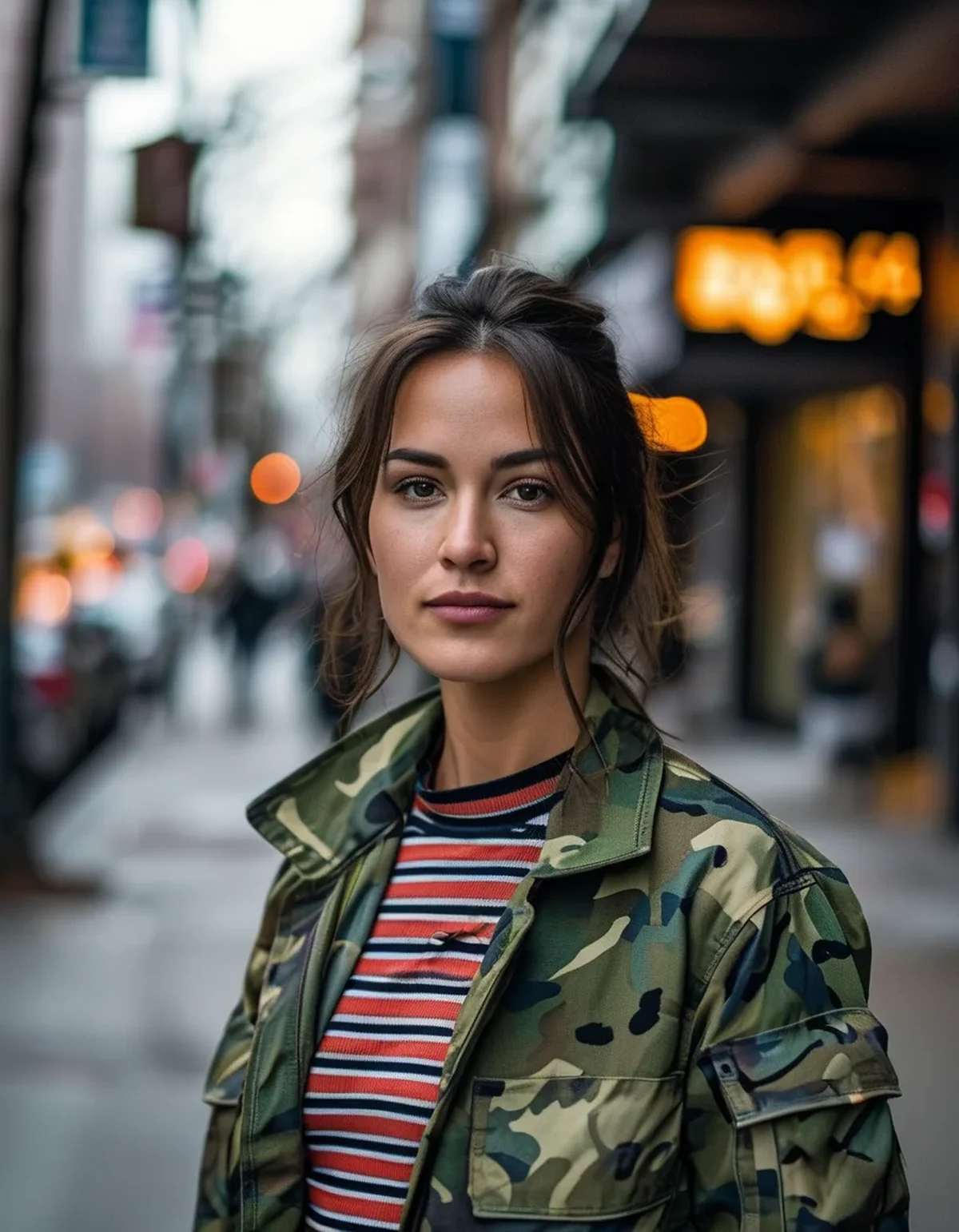
Quick Answer: Mixing camo with another print works when the two patterns differ significantly in scale — pair large-scale camo with a small, tight print (thin stripes, micro florals), never two patterns of similar size and busyness.
Camo already reads as a pattern on its own, so adding a second one feels risky. But the scale rule turns it from a gamble into a formula you can repeat.
Why does pattern mixing usually fail, and how does the scale rule fix it?
Pattern mixing fails when both prints compete for attention at a similar visual scale — two bold, medium-sized patterns fight each other and read as cluttered. The fix is contrast in scale: one pattern needs to dominate (usually the larger camo piece) while the other stays small and quiet enough to act almost like texture rather than a competing statement.
What print pairings actually work with camo?
Thin pinstripes, micro florals, small polka dots, and fine houndstooth all pair well because their scale is small enough to recede next to camo’s larger blotches. Avoid pairing camo with another large-scale print like big florals, wide stripes, or leopard print at full size — those combinations are the ones that read as chaotic rather than intentional.

Where should each print go in the outfit?
Let camo take the larger, more visible piece — a jacket, wide-leg pant, or skirt — and keep the small-scale print to a smaller area like a fitted top, scarf, or thin-strap cami underneath. This placement mirrors the scale hierarchy and keeps one print clearly in the lead role.
5 Mistakes Everyone Makes Mixing Camo With Other Prints
- Choosing two prints of similar boldness, which creates visual competition instead of harmony.
- Skipping a solid-color anchor piece (shoes, bag) that gives the eye a place to rest.
- Mixing camo with another earthy pattern like animal print, which reads as trying too hard rather than intentional.
- Using two different camo scales together (like a large-pattern jacket with small-pattern pants) — this isn’t classic pattern mixing and mostly just looks mismatched.
- Over-accessorizing on top of an already busy two-print outfit, which pushes the whole look past ‘intentional’ into ‘too much.’
FAQ: Camo Pattern Mixing Questions, Answered
Is there a safe print to start with if I’ve never mixed patterns before?
Thin stripes are the easiest starting point since their linear structure reads as almost neutral next to camo’s organic shapes.
Does color matter as much as scale when mixing camo with another print?
Color matters too, but scale contrast is the bigger factor — a small-scale print in a clashing color still reads better than a same-scale print in a coordinated color.
Can I mix camo with a print in the same color family?
Yes, and it’s actually an easier entry point — same-family colors (like olive camo with a small tonal floral) reduce visual risk while you get comfortable with the scale contrast rule.
TL;DR:
- Mix camo with a print of contrasting scale, never a similarly bold one
- Thin stripes, micro florals, and small dots pair best with camo’s larger pattern
- Let camo lead in the larger piece, keep the second print to a smaller area
- Add one solid anchor piece so the eye has somewhere to rest
Start with a camo jacket over a thin-striped top — it’s the easiest version of this combination to get right on the first try.
Keep Reading
This article is for general informational and styling purposes only. Fit, sizing, and product availability may vary — check current details before purchasing.