Why Camo Always Looks Different Under Store Lighting Than It Does Outside
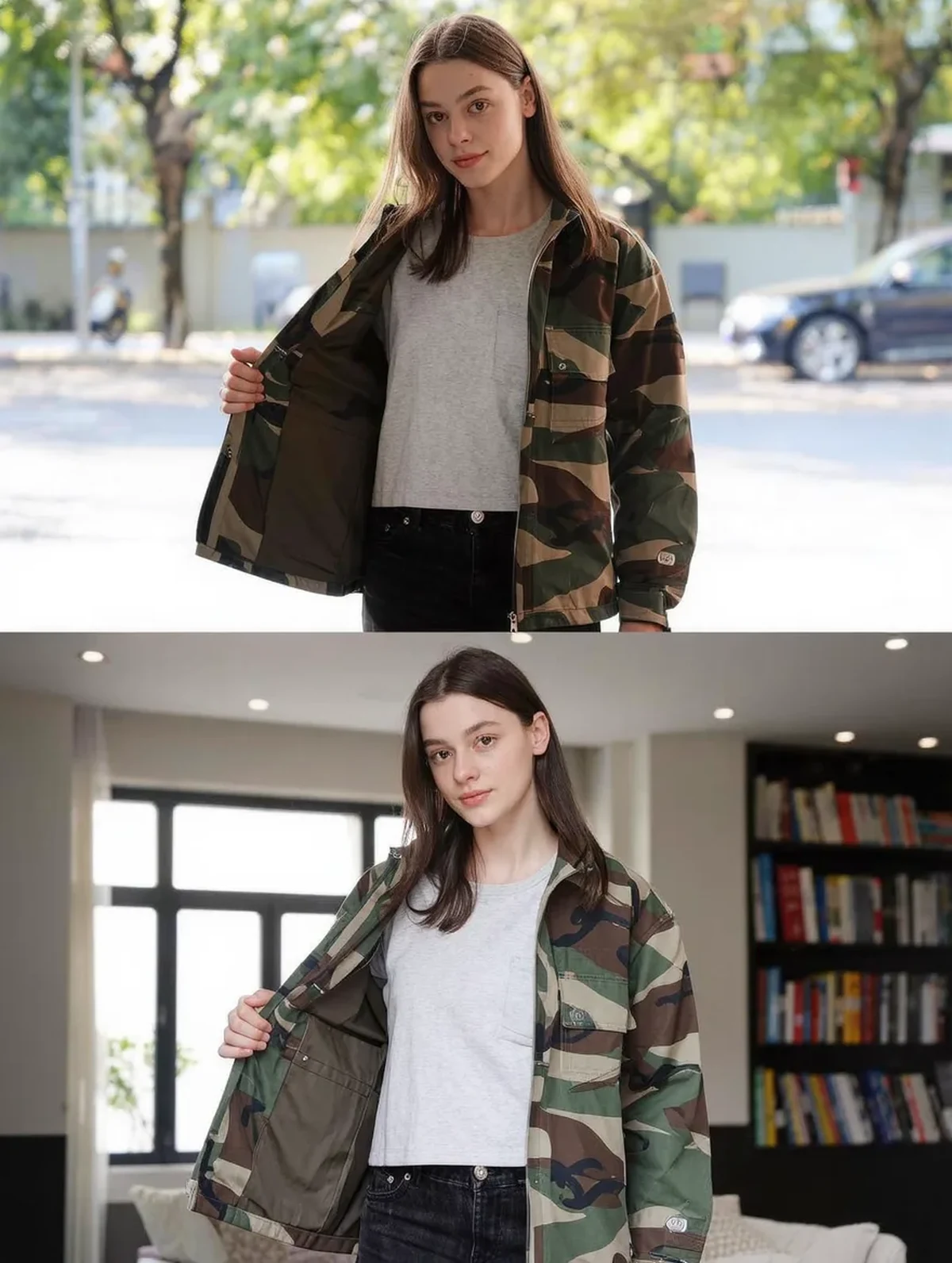
Quick Answer: Store lighting (usually cool-toned fluorescent or LED) shifts how camo’s mixed color palette reads compared to natural daylight, often making greens look more saturated and tans look cooler than they actually are. Checking any camo piece near a window or outside before buying prevents this mismatch.
Under the fitting room’s bright, even light, that camo jacket looked rich and well-balanced. Outside on the sidewalk five minutes later, it looks noticeably different — slightly washed out, or the colors suddenly clash in a way they didn’t inside. This happens constantly with camo specifically, more than with most other patterns.
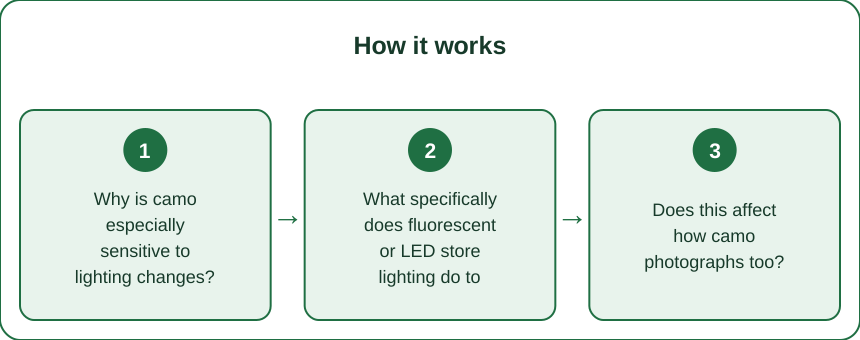
Why is camo especially sensitive to lighting changes?
Camo prints combine 3-5 colors in a mixed, irregular pattern, and each of those colors reacts differently to a given light source’s color temperature. Solid colors shift too under different lighting, but the shift is uniform and easy to mentally correct for; camo’s multiple colors shift at different rates relative to each other, which changes the balance between them, not just the overall tone.
That’s why a camo piece can look ‘off’ in a way that’s hard to describe under new lighting — it’s not just brighter or dimmer, the actual relationship between its colors has changed.
What specifically does fluorescent or LED store lighting do to camo?
Most retail lighting runs cooler and bluer than natural daylight, which tends to saturate greens and mute warm tans and browns relative to how they’d read outdoors. A camo print that looks balanced and earthy under store lighting can read noticeably cooler and more green-dominant once you step outside into daylight’s warmer, fuller spectrum.
This is also why online product photos (often shot under controlled studio lighting) sometimes disappoint in person — the lighting used for the photo may not match either the store or outdoor conditions you’ll actually wear it in.
Does this affect how camo photographs too?
Yes, and this compounds the shopping problem. Flash photography introduces its own color temperature, typically cooler and harsher than ambient light, which can make the same camo piece look different again in photos compared to how it looked in person under any lighting condition.
If you’re buying camo specifically for photos (an outfit for an event, content creation), it’s worth test-photographing a similar piece you already own under comparable lighting before committing to a new purchase based on how it looks in a mirror alone.
What Nobody Tells You About Shopping Camo Online
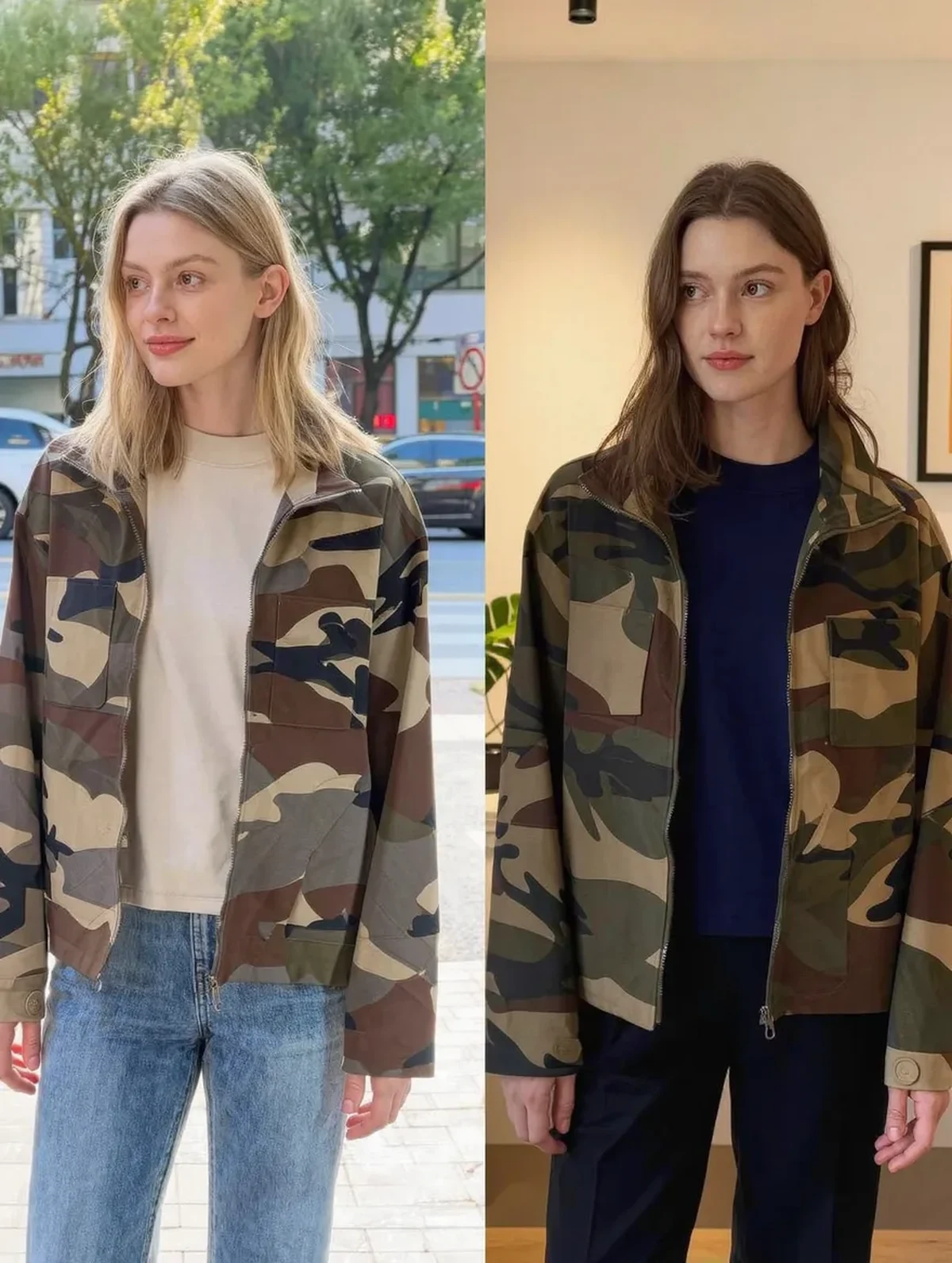
Product photos for camo items are especially prone to color-accuracy issues compared to solid-color garments, because subtle differences in white balance during photo editing shift the relationship between the print’s multiple colors, not just overall brightness — exactly the same mechanism that makes camo sensitive to real-world lighting changes.
A useful habit: check if the online listing includes an outdoor or natural-light photo, not just studio shots. If it doesn’t, treat the studio photo’s color balance as a rough guide rather than a guarantee.
What’s the actual test before buying a camo piece?
Check it near a window or, if possible, step outside for 30 seconds before purchasing. Fitting room lighting alone isn’t a reliable preview of how the piece will read in the settings you’ll actually wear it — daylight, outdoor evening light, or your own home’s lighting.
If a store doesn’t allow stepping outside with unpurchased items, at minimum move to any window light available — even indirect daylight through glass corrects for a meaningful portion of the fluorescent shift.
Myth vs Fact: Camo and Lighting
Myth: If it looks good in the store, it’ll look good everywhere. Fact: Camo’s multi-color composition makes it unusually lighting-sensitive compared to solid colors — a store-light check isn’t a reliable full preview.
Myth: This means the camo piece is poor quality. Fact: This is a property of camo prints generally, not a quality defect in any specific garment — even well-made camo shifts under different lighting.
Myth: Returning it means you made a shopping mistake. Fact: A lighting-driven mismatch is a completely normal reason to return camo specifically, precisely because in-store previewing is inherently limited for this print type.
FAQ: Camo and Lighting Differences, Answered
Does this happen with all camo styles, or just certain colorways?
High-contrast, multi-tone camo (mixing warm and cool colors together) shows the biggest lighting-driven shifts. More monochrome or two-tone camo shifts less dramatically since there’s less color relationship to disrupt.
Should I always buy camo in person rather than online?
Not necessarily, but checking return policies before buying camo online is worth the extra minute, given how common this specific lighting mismatch is compared to solid-color garments.
Will camo look different again once I’ve owned it a while and it’s slightly faded?
Slightly — fading tends to reduce contrast between the print’s colors over time, which can actually make some camo look more lighting-stable (less dramatic shift) than it did brand new.
TL;DR:
- Camo’s multiple mixed colors react differently to lighting than solid colors do, shifting how the colors balance against each other
- Cool fluorescent or LED store lighting tends to saturate greens and mute warm tans relative to daylight
- Check any camo piece near a window or outside before buying — fitting room lighting alone isn’t a reliable preview
- A lighting-driven mismatch is a normal, common reason to return camo, not a sign you shopped badly
The piece you loved in the store probably isn’t ‘wrong’ outside — it’s just showing you camo’s true colors, literally.
Keep Reading
This article is for general informational and styling purposes only. Fit, sizing, and product availability may vary — check current details before purchasing.